How to Respond to Negative Google Reviews: 2026 Guide
You open your phone on a Tuesday morning and there it is: a fresh 1-star review sitting at the top of your profile. Your heart sinks. It feels like a public attack on the business you've worked so hard to build. You aren't alone in that feeling. Research from WiserReview shows a single negative review on your first page can drive away 22% of potential customers. Learning how to respond to negative reviews on google isn't just about damage control; it's about protecting the brand you love.
We understand the emotional weight of public criticism and the confusion caused by Google’s 2026 policy shifts. It's stressful to manage feedback while staying compliant with new rules against coached reviews or employee quotas. This guide promises to help you transform a 1-star sting into a 5-star reputation using ethical, sincere strategies. We'll show you how to move from feeling overwhelmed to being in total control of your digital presence.
We'll explore professional response frameworks that save your image and encourage customers to update their ratings. You'll discover how to use systems like ActivCycle automation to create a steady, honest feedback loop. By the end, you'll have a repeatable process that turns every critique into a public demonstration of your integrity.
Key Takeaways
- A one star review feels like a crisis, but it's actually a public stage to prove your integrity to future customers.
- Learning how to respond to negative reviews on google with a structured framework helps you stay calm while protecting your brand image.
- Protect your Business Profile by following 2026 Google and FTC guidelines that prioritize transparency over risky manipulation tactics.
- Authenticity wins over robotic templates, so use specific service details to show customers there's a real person behind the screen.
- The Elevate plan and ActivCycle automation create a steady rhythm for your reputation management, moving you from being overwhelmed to being in control.
The Psychology of the 1-Star Review: Why Your Response Matters More Than the Rating
The sting of a 1-star review is real. It feels personal because you've poured your life into your business. But in 2026, a negative comment isn't a dead end. It's a public stage. You aren't just replying to one unhappy person; you're performing for every potential customer who scrolls through your profile. Google's algorithm notices this. It treats active engagement as a signal of business health. If you want to know how to respond to negative reviews on google effectively, you must first reframe the situation. This isn't a crisis. It's a feedback loop that proves you're listening.
Ignoring a review is often more damaging than the negative content itself. Silence suggests you don't care or that the reviewer is right. By engaging, you show you're present and accountable. This is a core pillar of online reputation management. When you speak up, you reclaim the narrative. You turn a static complaint into a dynamic conversation that showcases your brand's character.
Managing the Defensive Reflex
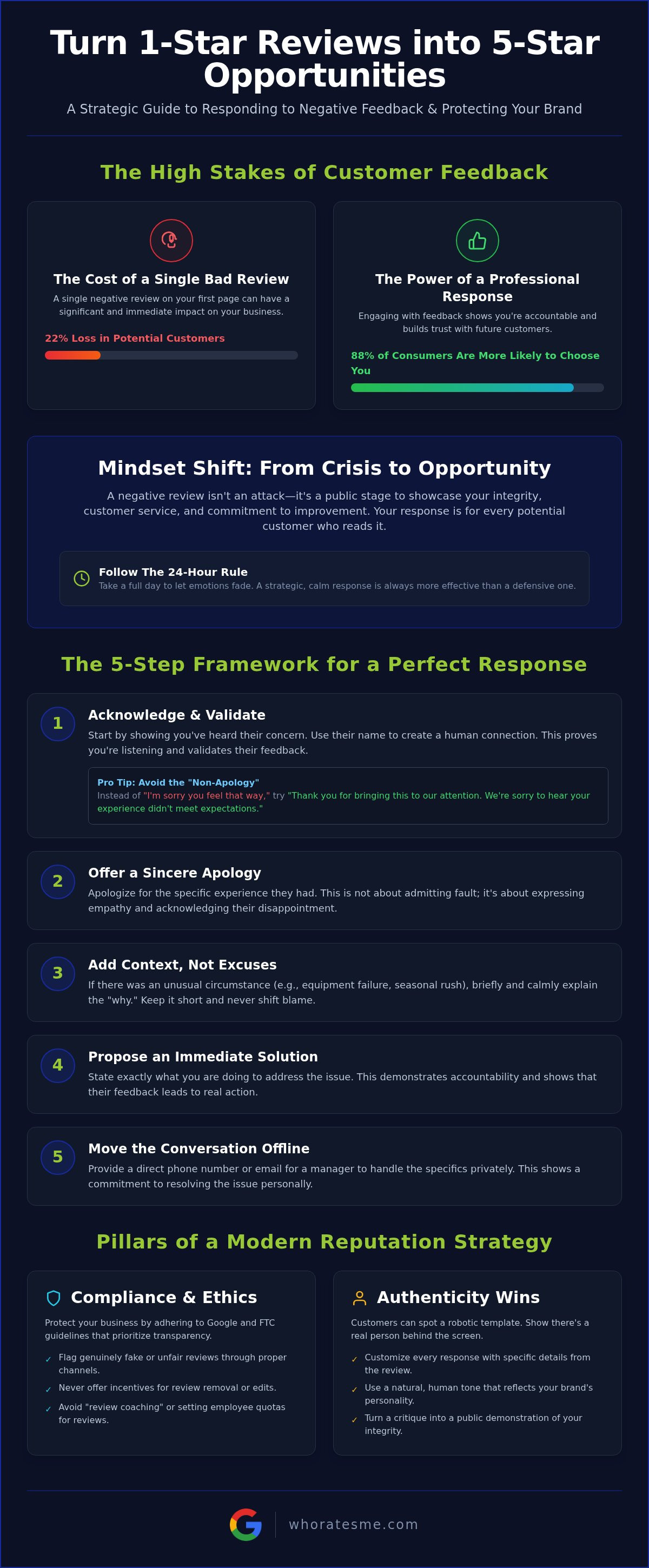
When you see a public attack, your brain treats it like a physical threat. Your heart rate climbs. You feel the urge to defend your honor. This reflex is natural, but it's rarely strategic. We suggest the 24-hour rule. Take a full day to let the adrenaline fade before you respond. Use this time to separate your personal identity from your business operations. A critique of a service isn't a critique of your soul. It's just data you can use to grow.
The ROI of a Professional Response
There is a clear financial benefit to staying professional. Statistics from 2026 show that 88% of consumers are more likely to choose a business that responds to all reviews over one that doesn't. A single negative review can lead to a 22% loss in potential customers if left unaddressed. However, a well-handled complaint can actually boost your conversion rates. It builds social proof through transparency. When you handle a mistake with grace, you show the next 100 customers that you are a reliable ally who values truth over perfection.
The 5-Step Framework for Responding Without Sounding Defensive
A negative review can feel like a direct hit to your reputation. It's natural to feel a sting, but your public response must remain a steady, stabilizing force that reassures potential clients you are listening. Mastering how to respond to negative reviews on google requires a repeatable system that prioritizes empathy over ego. This framework ensures you address the specific complaint while showing the rest of the world that you are a professional, solution oriented business owner.
The goal isn't to win an argument; it's to restore trust. Following a logical flow helps you stay calm when the criticism feels personal. You can move from a defensive posture to one of quiet confidence by following these five steps:
- Step 1: Acknowledge and Validate. Start by showing you've truly heard their concern. Use their name to establish a human connection immediately.
- Step 2: The Sincere Apology. Apologize for the experience they had, even if you don't agree with every detail. This isn't about admitting legal fault; it's about acknowledging their disappointment.
- Step 3: Add Context, Not Excuses. Briefly explain the "why" if there was an unusual circumstance, like an equipment failure or a seasonal rush. Keep it short and don't shift blame.
- Step 4: The Immediate Solution. State exactly what you're doing right now to fix the issue. This proves you value their feedback.
- Step 5: Move the Conversation Offline. Provide a direct phone number or email address to handle the specifics privately.
Crafting the Acknowledgement
Effective communication starts with active listening. Avoid the "non apology" trap where you say, "I'm sorry you feel that way." This phrase often sounds dismissive and can frustrate the customer further. Instead, try phrases like, "Thank you for bringing this to our attention, [Name]," or "We appreciate you sharing your experience with us." Following the SBA's guide to handling negative reviews, your tone should remain professional yet genuinely human. This approach validates their time and effort, which is the first step in de-escalating a high tension situation.
Providing Solution Oriented Action
Once you've acknowledged the pain, focus on the relief. A professional response should always include a clear commitment to quality. For example, you might say, "We've already updated our scheduling process to ensure this doesn't happen again." If you're managing multiple platforms, using a centralized reputation management dashboard can help you stay organized without the stress of missing a single comment. Always invite the customer to a private channel to discuss refunds or re dos. This protects their privacy while showing onlookers that you're willing to make things right. A single sentence stating your commitment to excellence can transform a 1 star review into a testament to your integrity.
Compliance and Ethics: Handling Fake or Unfair Reviews the Google-Approved Way
Integrity is the foundation of a lasting brand. In 2026, the legal landscape surrounding online feedback has shifted significantly. It's no longer just a matter of platform policy; it's a matter of federal law. The 2024 FTC rule created strict legal exposure for businesses that attempt to manipulate their public image through deceptive practices. You might feel tempted to take shortcuts when a malicious comment appears. Don't. A single mistake in compliance can lead to the permanent suspension of your Business Profile or heavy financial penalties.
Understanding how to respond to negative reviews on google while staying ethical is your best defense. The Consumer Review Fairness Act protects the right of customers to share honest opinions, even if those opinions are negative. This means you cannot legally use contracts to silence critics. Instead of fighting the law, focus on building a transparent system that values truth over a perfect score. Truth is more resilient than a manufactured reputation.
The Dangers of Selective Filtering
Review gating is a high risk gamble that no longer pays off. This is the practice of only asking happy customers for feedback while steering unhappy ones to a private form. Google’s 2026 detection patterns are highly sophisticated. They can identify when a business has an unnatural ratio of positive to negative sentiment compared to industry averages. If you're caught, the consequences are severe. Selective filtering can result in the removal of all your reviews or a public warning label on your profile that destroys trust instantly. For a deeper look at staying safe, read our Google Compliant Review Management Guide. Authentic growth is the only way to ensure long term stability.
Dealing with Inaccurate or Malicious Content
Not every 1-star review is legitimate. In 2026, estimates suggest that 30% of all online reviews are fake or manipulated. If you identify a review that violates Google’s policies, such as a conflict of interest or spam, you have the right to flag it. Follow this process carefully:
- Flag for Policy Violation: Use the "Report Review" tool in your dashboard. Select the specific reason, like "Spam" or "Conflict of Interest."
- Wait for a Decision: Google typically reviews these within 72 hours. Do not flag the same review multiple times, as this can slow the process.
- Write a Professional Rebuttal: If Google refuses to remove it, your response is your shield. State clearly and calmly that you have no record of a customer with that name or service date.
Keep your rebuttal short. Focus on the facts. By staying professional when a reviewer is lying, you show future customers that you are a calm, stabilizing force in a chaotic environment. Your integrity will outshine the malice of a fake comment.
The Template Trap: Why Authenticity Wins in 2026
Customers are savvy. They can spot a canned response from a mile away; it feels dismissive and cold. When you're learning how to respond to negative reviews on google, avoid the temptation to just copy and paste. Rigid templates often do more harm than good by making you look like a corporate robot. Real people want to talk to real people. Using specific, service-related details proves you've actually read the feedback. If a customer mentions a late arrival on a Tuesday afternoon, mention that specific window. This level of detail transforms a generic apology into a genuine conversation.
Consider the difference in sentiment. A generic "we value your feedback" usually results in further frustration. In contrast, an authentic response that addresses the specific issue often leads to the customer updating their rating. It's about showing you care enough to pay attention to the details of their day. Statistics from 2026 show that 88% of consumers are more likely to choose a business that responds to all reviews. Authenticity is the bridge that turns a skeptic into a loyal fan.
Building Your Own Voice Library
You don't need to reinvent the wheel every time. Instead of rigid templates, build a library of modular response blocks. Define your brand voice: is it empathetic, authoritative, or friendly? Create a series of opening and closing statements that match this tone. You can then mix and match these blocks with specific details about the customer's experience. This approach ensures consistency across multiple locations without sacrificing the human touch. It's the perfect balance of efficiency and personalization. You remain professional while staying grounded in reality.
The Role of the Mobile App in Real-Time Responses
Speed is a critical factor in customer satisfaction. In 2026, data shows that failing to respond to feedback can lead to a 15% increase in customer churn. Using a mobile app for real-time monitoring allows you to catch issues as they happen. Knowing how to respond to negative reviews on google involves being both fast and sincere. A quick "I'm looking into this" reply can stop a situation from escalating. It reassures the customer that their voice is being heard immediately. To streamline this process without losing your brand's soul, consider using ActivCycle automation to manage your feedback loops with ease.
Scaling Your Reputation Management with ActivCycle Automation
Managing a few reviews a month is a task you can handle manually. As your business grows, the volume of feedback can quickly become a source of stress rather than a tool for growth. You need a system that works in the background so you can stay focused on your daily operations. ActivCycle automation streamlines the feedback loop without sacrificing the integrity of your brand. It moves you from a reactive state, where you're constantly put out fires, to a proactive strategy that builds long term trust. Learning how to respond to negative reviews on google is essential, but having a system that encourages a steady flow of authentic feedback is what maintains a 4.5 star rating or higher.
The Elevate Google compliant plan provides the structure you need to manage multiple platforms from a single, centralized dashboard. You don't have to jump between different apps or login screens to see what your customers are saying. This unfiltered view of your reputation allows you to spot trends before they become major issues. By integrating your management tools, you ensure that no customer voice is lost in the noise. Automation isn't about replacing the human touch; it's about creating the space for it to happen more effectively.
Implementing a Compliant Feedback Loop
The best time to ask for a review is at the "Peak of Satisfaction." This is the moment when your service is complete and the value you've provided is freshest in the customer's mind. Automation allows you to trigger these requests at exactly the right time. It's vital to ensure every customer has a clear path to provide feedback, regardless of their experience. This transparency is what keeps you compliant with Google's latest policies. For a deeper look at the tools available, check out our Customer Feedback Software Guide. A fair system is a resilient system.
The Future of Ethical Growth
Short term hacks might offer a temporary boost, but they often lead to account suspensions or legal trouble under 2026 FTC guidelines. Long term credibility is built on a foundation of honesty and consistent engagement. Your next step should be a thorough audit of your current response process. Are you replying fast enough? Is your tone consistent? By moving toward an automated, ethical approach, you protect your reputation from the unpredictability of the digital landscape. You can explore the Elevate Google compliant plan today to see how a stabilized, synchronized system can transform your business's future.
Reclaiming Your Digital Reputation with Confidence
A single negative comment doesn't have to define your business. It's a chance to show your integrity. You've learned that mastering how to respond to negative reviews on google is about more than just damage control; it's about building a public narrative of trust. By using a structured framework and choosing authenticity over rigid templates, you turn critics into witnesses of your professionalism. You don't have to carry the weight of reputation management alone.
True growth happens when you move from a reactive posture to a steady, automated rhythm. Our system ensures you stay compliant with the latest 2026 guidelines by avoiding risky tactics like review gating. Instead, we focus on honest feedback loops and sincere engagement. You can start managing your reputation ethically with the Elevate Plan today. With ActivCycle automation and Google compliant strategies, you'll have the tools to protect what you've built. You possess the expertise to provide great service; let us help you ensure the world sees it clearly.
Frequently Asked Questions
Can I delete a negative review on Google if it is unfair?
You cannot personally delete a negative review just because it feels unfair. Google only removes content that violates specific policies, such as harassment, spam, or a clear conflict of interest. If the review is simply a difference of opinion, your best strategy is to address it publicly. We strictly avoid review removal services because they often violate platform terms. Focus instead on a professional response that demonstrates your commitment to customer satisfaction.
How long should I wait before responding to a bad review?
We recommend waiting between 24 and 48 hours before you hit send. This cooling off period prevents you from reacting defensively while ensuring you meet consumer expectations. Data from 2026 shows that 53% of customers expect a response within one week. Using a mobile app for monitoring helps you stay aware of new feedback without feeling pressured to reply instantly. A calm, measured response is always more effective than a hurried one.
Will responding to a negative review help my SEO?
Yes, engaging with your customers directly impacts your local search performance. Google's algorithm views active engagement as a signal of a healthy, trustworthy business. When you learn how to respond to negative reviews on google, you're signaling to the search engine that you're an active participant in your community. Research indicates that businesses responding to at least 25% of their reviews see an average revenue increase of 35% compared to those who remain silent.
What should I do if a competitor leaves a fake negative review?
If you suspect a competitor is behind a malicious post, you should flag the review for a Conflict of Interest through your dashboard. Provide any evidence you have to Google's moderation team. If the review stays up, stay professional in your public rebuttal. State clearly that you have no record of a client by that name or a service on that date. This approach protects your integrity without escalating a public argument.
Is it illegal to offer a discount in exchange for removing a negative review?
Yes, offering incentives like discounts or cash in exchange for removing a review is illegal under the 2024 FTC rules. It's also a major violation of Google's 2026 Rating Manipulation policy. These practices can lead to significant financial penalties and the permanent suspension of your Business Profile. We advocate for ethical growth through our Elevate plan, which focuses on authentic customer experiences rather than risky manipulation tactics that could destroy your long term credibility.
How can I get more positive reviews to bury the negative ones ethically?
The most effective way to improve your rating is through a consistent, automated feedback loop. You can use ActivCycle automation to invite every customer to share their experience at the peak of their satisfaction. Avoid review gating or selective filtering, as these are policy violations. By providing a clear path for all customers to speak up, you naturally gather more authentic, service related comments that reflect the true quality of your work.
Does Google penalize businesses for having negative reviews?
Google doesn't penalize you for the existence of negative feedback, but it does penalize deceptive practices used to hide it. Honest reviews, even the critical ones, provide a realistic view of your business. However, a lower overall star rating can influence your ranking in local search results. A one star increase can lead to a 5% to 9% increase in revenue. Focus on maintaining a high volume of authentic reviews to balance out occasional criticism.
What is the best way to move a customer conversation offline?
The most professional approach is to provide a direct contact point in your public reply. You might say, "We'd like to hear more about this. Please reach out to our manager directly at [Phone Number] or [Email]." This protects the customer's privacy and keeps sensitive details off a public forum. It also shows potential clients that you are a solution oriented business owner who is willing to take the time to make things right.
