
The Customer Feedback Management Process: A Guide to Ethical Growth
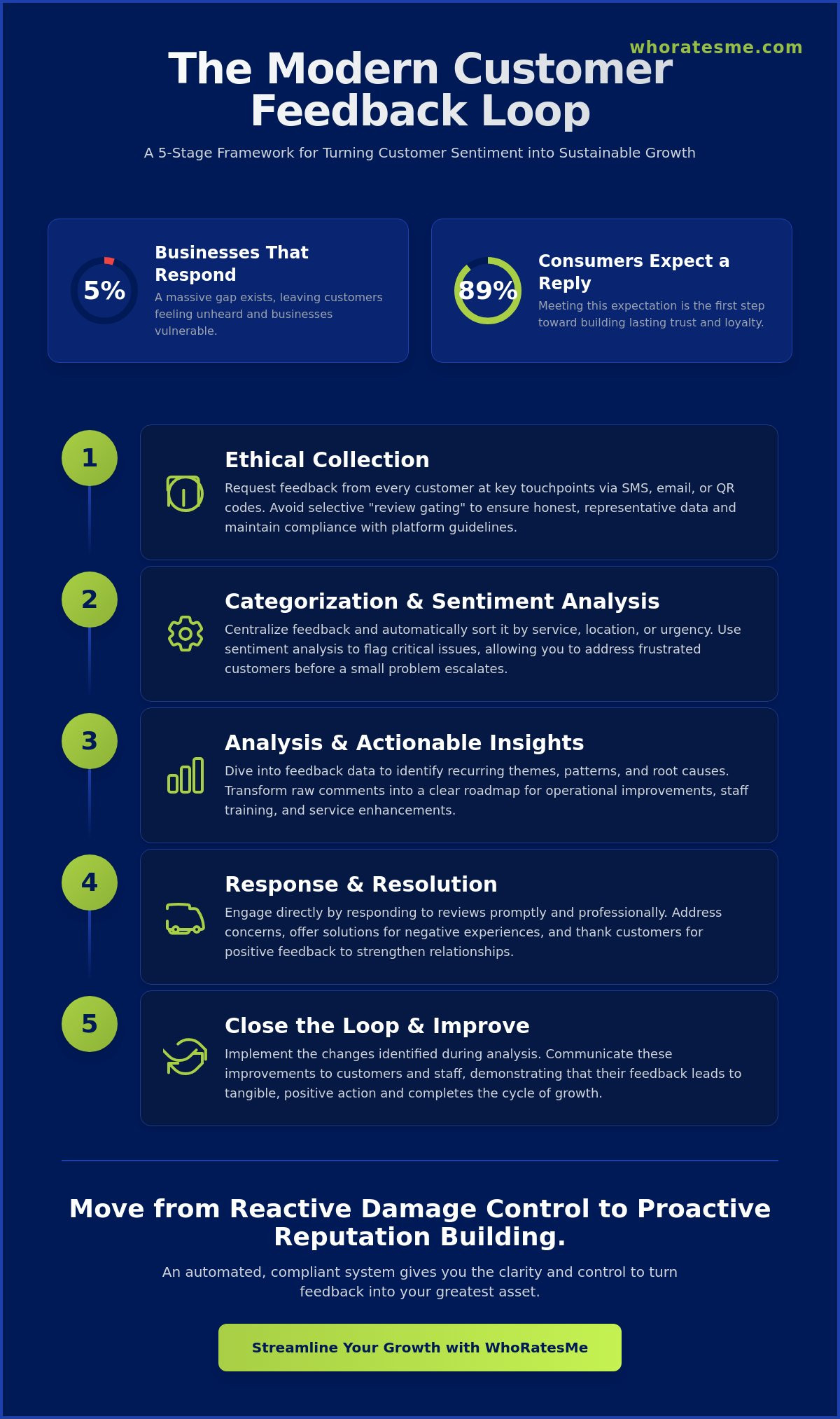
Only 5% of businesses respond to their online reviews, even though 89% of consumers expect a reply. This gap is exactly where a strong customer feedback management process becomes your competitive advantage. You likely feel the pressure of this every day. Between managing fragmented feedback across multiple platforms and the quiet fear that one negative comment might damage your brand, the manual workload is heavy. It's exhausting to feel like you're constantly chasing your own reputation.
You deserve a system that offers order and clarity. This guide will show you how to build a sustainable, Google-compliant loop that turns raw insights into authentic growth. We'll help you move away from the stress of manual monitoring and toward a workflow that feels like it's on autopilot. We will explore how to use ActivCycle automation to streamline your tasks, stay compliant with new 2026 data privacy laws, and build a reputation rooted in radical transparency. By the end, you'll have a clear path to turning customer sentiment into your most powerful business asset.
Key Takeaways
- Discover how to transition from stressful, reactive damage control to a proactive system that builds long-term trust.
- Learn the 5 essential stages of an ethical customer feedback management process to ensure every piece of sentiment is captured and addressed.
- Stay ahead of 2026 compliance standards by understanding the risks of review gating and the benefits of radical transparency.
- Explore how to centralize fragmented reviews across Google and Yelp into a single, mobile-friendly workflow.
- See how ActivCycle automation can handle the heavy lifting of reputation growth while keeping your business fully Google-compliant.
What is a Customer Feedback Management Process?
Running a business is a labor of love, but it often feels like a precarious balancing act. You're managing staff, inventory, and customer expectations all at once. A customer feedback management process is the stabilizing force that keeps this balance in check. It is a systematic workflow designed to capture, analyze, and respond to the way people feel about your service. Instead of waiting for a crisis to erupt, this process allows you to listen in real-time. It marks the shift from reactive damage control to proactive reputation building; a transition from fearing the phone to welcoming the insight.
This process is built on the foundation of the Voice of the Customer (VoC). This concept focuses on the in-depth process of capturing customer requirements, expectations, and preferences. A structured system brings order to the chaos. It distinguishes between internal feedback, which helps you refine your operations behind the scenes, and public-facing review management, which builds your outward credibility. Without this distinction, businesses often feel overwhelmed by the sheer volume of noise. You deserve a clear, unfiltered view of your business, and that begins with a steady rhythm of listening.
The Core Components of a Feedback System
A healthy system starts with reliable collection tools. You need a way to gather data that doesn't feel intrusive or high-pressure for the customer. Once collected, this information requires centralized storage. It's exhausting and inefficient to jump between Google, Yelp, and various industry-specific sites. Bringing these platforms together into a single dashboard allows you to see the full picture. This synchronization turns raw text into actionable insights. You stop seeing individual complaints as personal attacks and start seeing them as patterns. These patterns are the roadmap to improving your service and strengthening your community connection.
Why Businesses Struggle Without a Process
Many businesses fall victim to the "silent majority" problem. When there's no clear, automated path for feedback, only the loudest and often angriest voices are heard. This creates a skewed view of your actual performance. It also leads to inconsistent responses across different platforms. One customer might get a thoughtful reply on Google, while another's ignored on Yelp for weeks. This fragmentation erodes your brand's integrity. You miss the critical window for service recovery, often turning a small misunderstanding into a lost customer for life. A structured customer feedback management process ensures that every voice is acknowledged, protecting your hard-earned reputation from the cracks of manual error.
The 5 Core Stages of a Sustainable Feedback Loop
A feedback loop is a continuous cycle of improvement. It's the engine that drives your business forward by turning customer experiences into operational intelligence. To build a truly sustainable customer feedback management process, you need a framework that ensures no insight is wasted. Many business owners feel the weight of scattered comments; it's hard to know which voices to prioritize. By following a structured loop, you move from guessing what people want to knowing exactly how to serve them better. This balance of automation and genuine human touch creates a reputation that's both powerful and authentic.
Stage 1: Ethical Collection
You might feel tempted to only ask for feedback from customers you know are happy. It's a natural instinct to protect your hard-earned reputation. However, true growth comes from transparency. Ethical collection means requesting feedback at key touchpoints from every single customer. Whether you use SMS, email, or in-person QR codes, the goal is to make the process effortless. Asking everyone ensures your data is honest and representative. It also keeps you compliant with search engine guidelines, which strictly forbid selective filtering or review gating. When you invite everyone to the conversation, you demonstrate a quiet confidence in your service.
Stage 2: Categorization and Sentiment Analysis
When feedback starts rolling in, it can quickly become overwhelming. You need a way to sort the noise. Categorizing responses by service type, location, or urgency provides the clarity you need to make decisions. Identifying the emotional tone behind the words is equally vital. Modern technology assists in automating feedback management by flagging critical issues that require immediate management attention. This allows you to address a frustrated customer before their sentiment turns into a public complaint. It's about being a stabilizing force before a situation escalates.
Stage 3: Analysis and Actionable Reporting
This is where you turn raw data into a better business. By identifying recurring pain points, you can adjust your operational standards and train your staff more effectively. The most important part of this stage is closing the loop. If a customer's suggestion leads to a change, let them know. It shows you value their voice and strengthens the human connection behind your brand. If you find yourself struggling to keep up with these stages, using a centralized review management tool can provide the steady rhythm your business needs. This ensures your customer feedback management process remains consistent, helping you protect your reputation without the daily stress of manual tracking.
Compliance and Ethics: Navigating the Modern Landscape
Protecting your business reputation in 2026 requires more than just good service. It requires a deep commitment to Compliance and Ethics. As new state-level data privacy laws like the ICDPA in Indiana and the KCDPA in Kentucky took effect on January 1, 2026, the way you handle personal data has become a matter of legal necessity. Integrating these standards into your customer feedback management process isn't just about avoiding fines. It's about building a foundation of trust that can't be shaken by algorithm updates or regulatory shifts. You want a reputation that lasts, and that starts with playing by the rules.
Why Review Gating is a Strategy of the Past
Review gating is the practice of selectively filtering out unhappy customers before they have a chance to post a public review. It might feel like a safety net. It isn't. In fact, both the FTC and Google have tightened regulations in 2026 to penalize businesses that engage in this selective transparency. If a platform discovers you're only inviting "happy" clients to share their thoughts, your entire profile could face a "reputation collapse." This means your hard-earned ratings could be suppressed or removed entirely. A Google-compliant customer feedback management process treats every customer interaction as an opportunity for an honest record. Real growth is steady. It doesn't rely on hiding the truth.
The Value of the Negative Review
It sounds counterintuitive, but a perfect 5.0 rating can actually hurt your business. Modern consumers are savvy. They recognize the "Authenticity Gap." When a business has zero negative feedback, many consumers start to wonder if the reviews are real. They look for the way you handle criticism. Since 89% of consumers expect a response to their reviews, the way you answer a 1-star comment is a public demonstration of your integrity. Responding with empathy and a solution often builds more trust than a dozen perfect comments. It shows you're a real person running a real business. Turning a poor experience into a recovery story proves your commitment to your community. Authenticity is your greatest asset. It's more valuable than a flawless score because it proves you're honest, reliable, and human.
Best Practices for Multi-Channel Management
Managing a reputation across Google, Yelp, and various industry-specific sites can feel like a full-time job you didn't apply for. It's exhausting. A fragmented customer feedback management process often leads to missed messages and slow response times. You need a way to bring these disparate voices into a single, quiet space. This centralization allows you to breathe. It gives you back your time. By organizing your workflow, you move from being reactive to being in total control of your brand's narrative.
Harnessing the Power of a Centralized Dashboard
Logging into five different platforms every morning is the definition of "dashboard fatigue." It’s inefficient. A centralized dashboard offers a bird’s-eye view of your reputation. Whether you have one location or several, seeing everything in one place ensures a consistent brand voice. You can spot trends across different platforms without the mental clutter of switching tabs. This synchronization is the key to maintaining a steady, professional presence that customers can trust.
While many software guides focus solely on desktop applications, local service-based companies need more flexibility. You aren't always behind a desk. A mobile app is essential for maintaining a responsive feedback process. It allows you to acknowledge a comment while it's still fresh, providing the quick, empathetic touch that customers value. Being able to manage your reputation from the palm of your hand ensures that no customer feels ignored, no matter where you are.
Automation vs. Human Connection
There is a "sweet spot" where technology and empathy meet. Automation is perfect for the repetitive tasks: requesting reviews and initial categorization. It keeps the rhythm steady and ensures the work gets done. However, humans are essential for complex problem solving. When a customer shares a detailed concern, they want to know a real person is listening. This balance keeps your customer feedback management process scalable but deeply personal. It protects the human connection that is the heart of your business.
Empowering your team is the final piece of the puzzle. Set realistic response times for different types of feedback. Not every comment needs an instant reply, but every comment needs a thoughtful one. When your staff knows the standards and has the right tools, they can handle feedback without constant oversight. This creates a culture of accountability and pride. If you're ready to simplify your workflow, our multi-platform management tool provides the mobile-first control you need to stay responsive and professional.
Streamlining Your Growth with ActivCycle Automation
Managing a local service business shouldn't mean spending your evenings glued to a laptop, chasing reviews. You've already done the hard work of providing great service. You deserve a system that works as hard as you do. WhoRatesMe simplifies the customer feedback management process by bringing order to the chaos. Through our ActivCycle automation, you can put your feedback collection on an ethical autopilot. This isn't about cutting corners. It's about creating a steady, reliable rhythm that protects your reputation while you focus on your customers.
Our Elevate plan is designed with a deep understanding of 2026 standards. It remains strictly Google-compliant, ensuring your growth is sustainable and safe from platform penalties. You get a dedicated mobile app for real-time reputation monitoring. This means you can see and respond to feedback the moment it happens, even when you're on the move. It provides the quiet confidence that comes with being in total control. You stop reacting to problems and start synchronizing your growth with your actual performance.
Why WhoRatesMe Prioritizes Authenticity
We believe that being real is more important than being flawless. Our process avoids shortcuts like review gating or removals. These tactics only lead to long-term risk. Instead, we focus on capturing authentic, service-related comments from real customers. These are the specific details that drive actual decisions for future clients. We act as a seasoned mentor, offering supportive, peer-to-peer guidance to help you navigate your reputation journey with integrity. It's about building a community of trust rather than a wall of manufactured praise.
Getting Started with a Compliant Process
Transitioning from a manual mess to an automated system is a profound relief. You'll stop worrying about fragmented data across different platforms and start seeing a clear, unfiltered view of your business. A well-managed customer feedback management process offers a visible return on investment. It improves your local rankings through genuine sentiment and higher response rates. It's time to trade the stress of manual tracking for a streamlined workflow that feels natural. You can elevate your reputation ethically with WhoRatesMe and start building a legacy rooted in transparency.
Build a Reputation Rooted in Authenticity
The transition from a manual, fragmented system to a streamlined customer feedback management process is more than just a technical upgrade. It's a shift toward total clarity and order. You’ve seen how radical transparency and Google-compliant practices protect your business from the risks of review gating and platform penalties. By centralizing your efforts across multiple platforms into one dashboard, you reclaim your time and focus on what truly matters: serving your community. Authenticity isn't about being perfect; it's about being real, honest, and responsive to every voice.
You don't have to carry the weight of reputation management alone. With ActivCycle automation, you can maintain a steady rhythm of growth without the daily stress of manual tracking. It’s time to move toward a future where your feedback loop works on ethical autopilot. Start your journey to a Google-compliant reputation today and see the difference that a dedicated, supportive ally makes. Your hard work deserves to be seen, and your reputation is worth protecting. We're here to help you grow with integrity and quiet confidence.
Frequently Asked Questions
What is the difference between feedback management and review management?
Feedback management is the internal process of listening to customers to improve your operations; review management is the public-facing side of that conversation. While feedback helps you fix service gaps behind the scenes, reviews build your outward reputation on platforms like Google and Yelp. A complete customer feedback management process bridges both, ensuring that private insights lead to public excellence. It's about being better before you ask the world to notice.
Is review gating illegal or just against platform policies?
Review gating is both a violation of platform policies and a focus of increasing regulatory scrutiny. In 2026, the FTC and search engines have become much stricter about selective transparency. If you only invite happy customers to leave reviews, you risk having your entire profile suspended. It's better to build a reputation on honesty. Authenticity is a much safer foundation for long-term growth than a filtered, "perfect" score.
How often should I be requesting feedback from my customers?
You should request feedback after every significant service interaction to maintain an accurate view of your business. Consistency is the key to a healthy customer feedback management process. Waiting too long makes the experience hazy for the customer. By asking while the service is fresh, you capture the most authentic details. This steady rhythm ensures your data is always current and representative of your daily hard work.
Can I automate my responses to customer reviews safely?
You can safely automate the request for a review, but the response itself often needs a human touch. Automation is a powerful tool for consistency and categorization. However, responding to a specific concern requires empathy that technology cannot replicate. Use tools like ActivCycle to handle the repetitive collection tasks. This leaves you free to provide the personal, sincere replies that truly build community trust and loyalty.
How does a feedback management process help with SEO?
A structured feedback process improves SEO by generating a steady stream of fresh, keyword-rich content. Search engines prioritize businesses that are active and highly rated by real users. When customers leave service-related comments, they naturally use the terms potential clients are searching for. These authentic signals tell search engines your business is reliable and relevant, helping you climb the local rankings without resorting to "hype" or shortcuts.
What should I do if a customer leaves a fake or malicious review?
If you encounter a fake review, your first step should be to remain calm and flag the content for platform moderation. Avoid getting into a public argument. Instead, leave a professional, level-headed response that invites the reviewer to contact you directly to resolve the issue. This demonstrates your integrity to other readers. It shows you're a responsible business owner who values truth and seeks to protect your reputation with grace.
How long does it typically take to see results from a new feedback process?
You will likely see an increase in feedback volume immediately, but building a powerful reputation takes consistent effort over several months. A new process provides instant order and clarity to your workflow. However, the true ROI comes from the long-term accumulation of authentic sentiment and improved service standards. It's a journey of natural growth. Trust isn't built overnight; it's earned through a steady commitment to listening and improving.
Is a mobile app necessary for managing customer feedback?
A mobile app is essential for staying responsive in a fast-moving, service-based environment. You aren't always at a computer, but your customers are always sharing their experiences. Having real-time monitoring in your pocket allows you to address concerns before they escalate. It provides the flexibility to manage your reputation from anywhere. This level of responsiveness is a key differentiator that shows customers you truly value their time and input.
